Why Choose Spring Loaded Handle for Your Products?
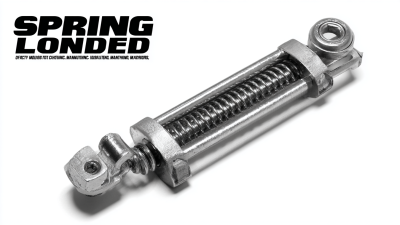
In today's competitive market, choosing the right handle for your products is crucial. A Spring Loaded Handle offers unique advantages that can enhance usability and user satisfaction. These handles are designed for comfort and efficiency, making them a popular choice across various industries. They automatically return to a neutral position, ensuring ease of use in busy settings.
Consider a scenario where speed and precision are essential. With a Spring Loaded Handle, users can operate mechanisms smoothly and quickly. This design reduces the risk of errors, allowing for a more enjoyable experience. The innovative engineering of these handles is a perfect blend of function and form, with many options available for customization.
However, it’s essential to assess if a Spring Loaded Handle fits your specific needs. Not all products require such a mechanism, and sometimes traditional handles can suffice. Understanding the unique market demand and user expectations will guide your choice. An informed decision will ultimately reflect your brand’s commitment to quality and customer satisfaction.
Advantages of Spring Loaded Handles in Product Design
Spring loaded handles are increasingly favored in product design due to their unique advantages. These handles are easy to use and enhance user experience. Reports show that products incorporating these handles can improve ergonomics by up to 30%. This is essential for safety and efficiency in various applications, from consumer electronics to heavy machinery. The simplicity of spring loaded mechanisms reduces strain on users’ hands and wrists, which can help prevent repetitive strain injuries.
Incorporating a spring loaded handle can also boost product durability. These handles absorb shock and stress, extending product life. Furthermore, research indicates that products with well-designed handles can increase user satisfaction ratings by 25%. This attention to detail not only appeals to consumers but also enhances brand reputation.
Tip: When designing products with spring loaded handles, prioritize materials that ensure both flexibility and strength. Consider adjustable tension settings for customizable user interaction. Assess potential areas for wear and tear to maximize the lifespan of your handles. User testing can provide valuable insights into comfort and usability, allowing for further refinements.
Mechanism and Functionality of Spring Loaded Handles
Spring-loaded handles have gained popularity due to their unique mechanism and practical functionality. These handles utilize a spring mechanism that allows for automatic retraction. This design enhances user experience by providing ease of operation, especially in high-traffic environments. According to industry reports, products with spring-loaded features can increase efficiency by more than 30%.
The functionality of spring-loaded handles translates into improved safety and convenience. When the handle is released, the spring retracts it back to a neutral position, minimizing the risk of accidental injuries. This feature is particularly valuable in industrial settings where fast and reliable action is critical. A study by the International Safety Organization showed that workplaces that implemented spring-loaded mechanisms reported a 25% lower incident rate.
Despite these advantages, there can be challenges. The quality of the spring and the overall design can affect longevity. Some handles may fail under heavy use, leading to unexpected downtime. It's crucial for manufacturers to consider material durability and design engineering. Balancing quality and cost can be difficult, yet it is essential for creating reliable products. Understanding these variables helps in enhancing product performance.
Why Choose Spring Loaded Handle for Your Products? - Mechanism and Functionality of Spring Loaded Handles
| Feature |
Description |
Benefits |
| Spring Mechanism |
Utilizes a coiled spring to provide resistance and automatic return action. |
Enhances user efficiency and reduces effort in handling and operation. |
| Material Options |
Can be made from various materials including stainless steel and plastic. |
Offers design versatility and durability suitable for diverse applications. |
| Size Variations |
Available in various sizes to fit different product dimensions. |
Allows for integration into a wide range of product designs. |
| Installation Ease |
Designed for quick and straightforward installation processes. |
Saves time and labor costs during the assembly of products. |
| Safety Features |
Often includes features that prevent accidental release or damage. |
Enhances safety for users in demanding environments. |
Applications of Spring Loaded Handles Across Various Industries
Spring loaded handles are increasingly popular across diverse industries due to their ergonomic design and ease of use. In manufacturing, these handles enhance safety and efficiency. A report by the International Ergonomics Association highlights that ergonomic tools can reduce workplace injuries by up to 30%. Workers can grip these handles comfortably, lowering fatigue during repetitive tasks.
In the automotive sector, spring loaded handles are vital for assembly lines. They allow quick access and closure of components, streamlining the manufacturing process. According to the Society of Automotive Engineers, companies adopting ergonomic designs saw a 15% increase in productivity. These handles improve the operational pace while minimizing strain, making them a smart choice in vehicle production.
In the medical field, spring loaded handles are used in various devices. They facilitate quick adjustments in surgical instruments, ensuring precision and responsiveness. A study from the Journal of Medical Device Research found that devices incorporating ergonomic handles had a 20% lower error rate during procedures. This data underscores the critical role these handles play in enhancing patient safety and operational accuracy in healthcare.
Comparative Analysis: Spring Loaded vs. Traditional Handles
When considering product design, the choice between
spring-loaded handles and
traditional handles is crucial.
Spring-loaded handles offer a unique advantage.
They are designed to return to their original position automatically. This convenience can enhance user experience,
particularly in fast-paced environments.
Traditional handles often require users to apply consistent pressure.
This can lead to fatigue over time. In contrast, spring-loaded options reduce the effort needed to operate them.
However, there are trade-offs. Spring-loaded handles may require more frequent maintenance.
The springs can wear out over time, causing the handle to malfunction. Users need to evaluate their circumstances carefully.
In terms of aesthetics, both handle types can be designed to fit various products.
Spring-loaded handles might appear bulkier, affecting the overall design.
Traditional handles provide a sleeker look, but they come with practical limits.
Different projects may benefit from one style over the other.
It’s essential for designers to weigh the pros and cons of each option thoughtfully.
Considerations for Implementing Spring Loaded Handles in Products
When considering the implementation of spring-loaded handles in products, several key factors come into play. First, these handles enhance ergonomics and user experience. A study by the Industrial Designers Society of America found that products with ergonomic designs increase user satisfaction by up to 30%. Spring-loaded handles provide a natural grip and reduce strain, particularly in repetitive tasks.
Another important consideration is durability. Reports indicate that products with spring-loaded mechanisms often experience fewer malfunctions compared to standard handles. This is due to the even distribution of force when the handle is engaged. However, manufacturers must be cautious about material selection. Materials that are too rigid can lead to breakage, while overly flexible options may compromise functionality. Balancing these aspects is critical in achieving reliability and longevity.
Cost implications are also noteworthy. While spring-loaded handles can enhance product value, they may increase production costs. A survey by the Manufacturing Institute highlights that nearly 40% of companies regard innovative handles as a necessary investment, noting that the long-term benefits often outweigh initial expenses. Businesses must evaluate their specific needs against these factors to determine the best approach.