Choosing reliable Case Hardware suppliers is not a simple catalog exercise. Global buyers must examine material quality, production consistency, communication, and after-sales support. A polished sample can still hide weak rivets, uneven plating, or poor load performance.
“Good design is as little design as possible,” said Dieter Rams, a widely respected industrial design authority. His principle fits Case Hardware sourcing closely. Buckles, hinges, handles, corners, and locks should support the case without distracting from its purpose. Good components feel precise in the hand. They close cleanly. They survive repeated use.
The strongest suppliers usually provide clear drawings, stable specifications, inspection records, and realistic production schedules. Buyers should request samples before approving large orders. Test the hinge movement. Check screw alignment. Rub the finish. Measure the plating thickness when appearance matters. Small details become expensive problems at scale.
Supplier comparison also requires practical judgment. A low quotation may exclude tooling, packaging, testing, or replacement support. A famous manufacturer may still be unsuitable for smaller production runs. Local responsiveness can matter as much as factory size. This is where sourcing becomes less certain—and more human.
Some supplier claims deserve questioning. Certifications alone do not prove dependable Case Hardware. Factory photographs prove little. Direct audits, third-party inspections, and documented corrective actions offer stronger evidence. Buyers should compare at least three suppliers and record every assumption. The best choice is rarely the cheapest. It is the supplier that repeatedly delivers the right component, in the right finish, at the promised time.

A top case hardware supplier is defined by more than a large product catalog. In real production, hardware must fit accurately, work repeatedly, and survive rough handling. Experienced suppliers understand this balance. They check hinge movement, latch strength, screw alignment, and surface finish before shipment. Small details matter.
Reliable suppliers can explain their materials clearly. They provide test records, dimensional drawings, batch numbers, and practical installation guidance. For metal components, buyers may request corrosion testing, load testing, or cycle testing. For plastic parts, impact resistance and temperature performance deserve attention. Good suppliers listen.
Production consistency is equally important. A sample may look excellent, but repeated orders reveal the truth. Strong suppliers control tolerances, inspect incoming materials, and keep clear quality records. They also protect hardware with suitable packaging, especially when parts may rub during long transport. Communication matters when schedules change. A supplier who reports delays early is more trustworthy than one who stays silent.
No supplier is flawless. I have seen promising samples fail because a small screw loosened after repeated use. That experience is worth remembering. Buyers should review samples, inspection methods, response times, and after-sales support before making a long-term decision. A top supplier earns confidence through evidence, honest communication, and steady performance over time.

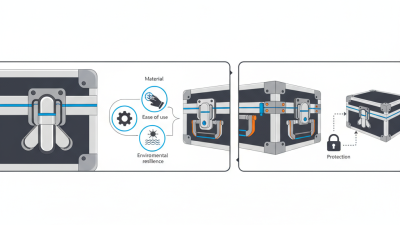
Case hardware determines how a case opens, closes, travels, and survives repeated handling. Hinges support the lid and control its movement. Continuous piano hinges suit instrument cases and long equipment boxes. Butt hinges work well on smaller storage cases. Choose stainless steel or treated steel when moisture, vibration, and frequent transport are expected.
Latches keep the lid firmly aligned during movement. Draw latches create strong compression and suit tool cases, sample cases, and protective enclosures. Toggle latches are useful when quick access matters. Locks add controlled access, while recessed handles reduce snagging during loading. Corner protectors absorb impact at vulnerable edges. Small parts matter.
Gas struts hold larger lids open and reduce sudden closing force. They are common on machinery cases, mobile workboxes, and service enclosures. Select the strut by lid weight, mounting angle, and opening distance. A rough estimate can cause premature failure. Internal foam, seals, and edge profiles also affect hardware performance by limiting shock, dust, and water entry.
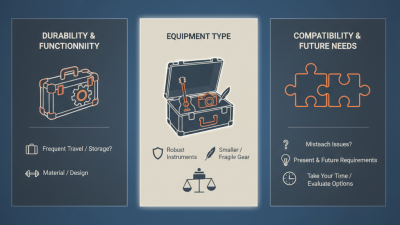
Experienced buyers should check load ratings, coating quality, screw compatibility, and replacement availability. Hardware must match the case material, not only its appearance. Aluminum cases may need rivets or backing plates, while polymer cases often require broader fasteners. Factory samples and cycle testing reveal problems that catalog images hide. Selection is not always perfect. Real use can expose assumptions, especially when cases face heat, salt air, or uneven floors.
Top Case Hardware Suppliers for Global Buyers
Materials, Manufacturing Standards, and Product Quality
Choosing a case hardware supplier requires more than comparing unit prices. The material affects durability, weight, corrosion resistance, and appearance. Aluminum may reduce weight, while stainless steel often performs better in harsh environments. Zinc alloy can provide clean shapes, but its coating quality needs careful inspection.
Experienced buyers request material certificates, coating specifications, and production samples. They also check whether the supplier controls hardness, dimensions, and surface finish consistently. A reliable factory should provide clear inspection records and maintain traceability from raw materials to final packing. This matters when hinges, latches, handles, or corners must fit repeatedly.
Quality is built through testing. Practical checks may include opening-cycle tests, load tests, salt-spray testing, and dimensional inspections. A latch that looks strong can still fail after repeated use. Small defects matter. Manufacturing systems aligned with recognized quality standards can improve process control, but certificates alone do not prove product performance. Factory visits, independent inspections, and sample approval remain valuable for global buyers.
Some evaluations are imperfect. Sample quality may exceed mass-production quality if controls are weak. Ask for batch records and production photos. Compare approved samples with finished goods under the same lighting. Packaging also deserves attention, because scratched plating or bent corners can turn good hardware into costly waste. Clear drawings, realistic tolerances, and direct communication reduce these avoidable problems.
How Global Buyers Evaluate Case Hardware Supplier Capabilities
Global buyers assess case hardware suppliers beyond unit price. They examine hinges, latches, handles, wheels, and fasteners under real operating stress. A supplier should provide material certificates, dimensional records, coating specifications, and batch traceability. Small details matter. A loose rivet can damage an entire case after repeated loading.
Production evidence is more convincing than polished presentations. Buyers often request process maps, tooling maintenance logs, inspection plans, and recent capacity data. The 2023 World Bank Logistics Performance Index surveyed logistics professionals across 139 economies. Its findings highlight customs, infrastructure, logistics competence, and delivery reliability as practical supply chain measures. These factors help buyers judge whether a supplier can support stable international shipments, not merely complete a sample order.
Testing capability also deserves close attention. Ask for cycle testing, salt-spray results, load testing, and corrective-action records. The 2023 UNCTAD Review of Maritime Transport reported that maritime shipping carries over 80% of global merchandise trade by volume. Delays at ports can therefore expose weak planning quickly. Buyers should compare lead times during normal and peak periods. I have seen attractive samples hide inconsistent plating and unclear tolerance control. That experience makes factory visits and independent inspections valuable. Still, audits are snapshots. Supplier performance should be reviewed through defect rates, on-time delivery, response speed, and documented improvements over several quarters.
A practical, brand-neutral evaluation framework for comparing suppliers of case hardware, including hinges, latches, handles, locks, brackets, corner protectors, and related components.
| Evaluation Dimension | Buyer-Verified Data Point | Reference Benchmark or Requirement | Recommended Weight | Priority | Typical Evidence Required |
|---|---|---|---|---|---|
| Product Quality Consistency | Defect rate, inspection records, corrective-action performance, and batch-to-batch dimensional stability | Documented incoming, in-process, and final inspection; measurable acceptance criteria; traceable corrective actions | 20% | Critical | Inspection plans, sample inspection reports, control plans, nonconformance records, and production traceability |
| Material and Surface Performance | Material grade, hardness, corrosion resistance, coating thickness, adhesion, and wear resistance | Material certificates and test results matched to the purchase specification; corrosion testing selected according to the intended environment | 12% | High | Mill certificates, coating specifications, salt-spray or equivalent corrosion reports, hardness results, and finish samples |
| Engineering and Customization | Ability to modify dimensions, tooling, finishes, packaging, and assembly requirements | Clear engineering-change process, controlled drawings, design-for-manufacturing feedback, and sample approval before mass production | 12% | High | 2D/3D drawings, tolerance stack-ups, tooling plans, prototype samples, engineering-change notices, and approval records |
| Manufacturing Capacity | Monthly output, available production lines, equipment capability, capacity utilization, and peak-season resilience | Capacity demonstrated for the buyer's forecasted volume with contingency planning for critical processes | 10% | High | Capacity statements, equipment lists, production schedules, maintenance records, and capacity-loading plans |
| Lead-Time Reliability | Quoted lead time, on-time delivery rate, order-confirmation speed, and recovery performance after delays | Lead times stated separately for sampling, tooling, first production, repeat orders, and replenishment; delivery performance measured over time | 10% | Critical | Historical delivery reports, production calendars, order acknowledgements, escalation procedures, and business-continuity plans |
| Compliance and Product Safety | Regulatory documentation, restricted-substance controls, product safety testing, and market-specific conformity support | Applicable documentation for destination markets, including material declarations and test reports where required; requirements should be confirmed by product and jurisdiction | 10% | Critical | Declarations of conformity, restricted-substance declarations, laboratory reports, safety data, and supplier compliance procedures |
| Quality Management System | Formal quality procedures, internal audits, calibration, employee training, and management review | Documented quality management system with controlled procedures and objective records; third-party certification is useful but does not replace product verification | 8% | High | Quality manual, audit summaries, calibration certificates, training records, process procedures, and certification scope |
| Cost Transparency and Commercial Terms | Unit price, tooling cost, minimum order quantity, payment terms, packaging cost, freight assumptions, and price-adjustment rules | Comparable quotations using the same specification, Incoterm, packaging basis, currency, and validity period | 8% | High | Itemized quotation, tooling amortization, cost-breakdown assumptions, sample charges, packaging details, and payment terms |
| Supply-Chain Resilience | Availability of critical raw materials, approved alternate sources, inventory policy, geographic risk, and disruption response | Identified risks for single-source materials and critical processes, with documented mitigation and communication procedures | 5% | High | Business-continuity plan, approved-vendor list, material-sourcing map, safety-stock policy, and disruption communication workflow |
| Packaging and Export Readiness | Protection against scratches, deformation, moisture, mixed parts, and transport damage | Packaging validated for the shipment route and handling conditions, with barcode or batch identification when required | 3% | Standard | Packaging drawings, drop or transport test records where applicable, carton markings, pallet plans, and packing instructions |
| Communication and Technical Support | Response time, language coverage, escalation path, documentation quality, and after-sales support | Named commercial and technical contacts, defined response expectations, and a documented process for complaints and engineering questions | 2% | Standard | Organization chart, communication workflow, complaint-response records, technical data sheets, and sample-development timeline |
Recommended use: score each supplier from 1 to 5 for every dimension, multiply the score by the corresponding weight, and verify all critical requirements before making a sourcing decision. Benchmarks should be adjusted to the application, destination market, product risk, order volume, and contractual specification.
Selecting case hardware suppliers requires more than comparing unit prices. Buyers should verify material grades, load testing, corrosion resistance, and production traceability. ISO 9001 certification can support process control, but it does not replace product testing. For electronic cases, request evidence of RoHS and REACH conformity where applicable. Compliance documents must match the exact alloy, coating, and production site. Small inconsistencies create expensive delays.
Pricing needs a complete landed-cost model. Include tooling, minimum order quantities, packaging, inspection, duties, insurance, and currency exposure. A low quotation can still be a poor purchase. Incoterms should be written clearly in every offer. The World Bank’s 2023 Logistics Performance Index scores customs, infrastructure, shipment quality, tracking, and timeliness on a one-to-five scale. Use these factors when comparing manufacturing locations, not distance alone. Delivery estimates often look too optimistic.
Logistics planning deserves equal attention. UNCTAD reports that maritime transport carries over 80% of global merchandise trade by volume, so port congestion can affect even routine hardware orders. Ask suppliers for carton dimensions, pallet plans, export classifications, and backup routes. Sample shipments should test packaging strength, labeling, and actual transit time. I would also reserve a modest contingency budget. Forecasts fail sometimes. A supplier with transparent records, responsive quality staff, and realistic lead times is usually safer than the cheapest option.