What Is Road Case Hardware and What Types Are Available?
Road Case Hardware is the working system that keeps a case closed, rolling, stackable, and repairable. It includes latches, hinges, handles, casters, corner protectors, and aluminum edging. Each part faces a different strain. A recessed handle may protect hands and walls, while a caster plate takes repeated impacts across loading ramps.
For clarity, this introduction uses a fictional shop-floor expert, technician Lena Ortiz, rather than presenting an unsourced quotation as fact. Her illustrative line is: “A latch is only reliable if it closes cleanly after the case has been knocked around.” The idea is simple. A shiny fitting can still fail if its screws loosen, its spring binds, or its shape does not suit the panel. I’ve seen hardware descriptions make every part sound interchangeable. It isn’t.
The sections that follow explain common hardware types and what each one does. They also consider material, mounting style, load, and how often a case travels. A steel butterfly latch may suit a touring trunk, while a light-duty draw latch may fit a small equipment case. Casters need particular attention: wheel diameter, plate strength, and floor conditions affect handling. Details matter. Even careful selection cannot prevent every failure, and that deserves saying plainly. Regular inspection can reveal a bent hinge or loose fastener before the next trip. This guide offers practical criteria, not a promise that one fitting works for every build.
What Road Case Hardware Is and Why It Matters
Road case hardware is the set of fittings that lets a case protect, move, and stack equipment. It includes latches, hinges, handles, casters, corner protectors, and lid stays. Each part has a distinct job. Latches hold panels together; hinges guide the lid; casters carry rolling loads across ramps and venue floors. Small parts matter.
Hardware matters because a case is handled repeatedly, not merely stored. A loose caster can make a loaded case veer; a bent latch can leave a gap where dust or moisture enters. Pollstar’s 2024 Year-End report recorded about $9.5 billion in gross sales across the top 100 worldwide tours, underscoring the scale of touring activity and the value of dependable equipment protection. The U.S. Bureau of Transportation Statistics reported that trucks moved 72.6% of U.S. freight by value in 2020, a reminder that road transport brings routine vibration and handling. A quiet latch is not proof of a sound case; that assumption deserves a second check. Inspect fasteners, test each latch under light pressure, and look for caster wobble before loading. Hardware selection still involves trade-offs: heavier fittings may add durability, but they also add weight.
The Main Components of Road Case Hardware
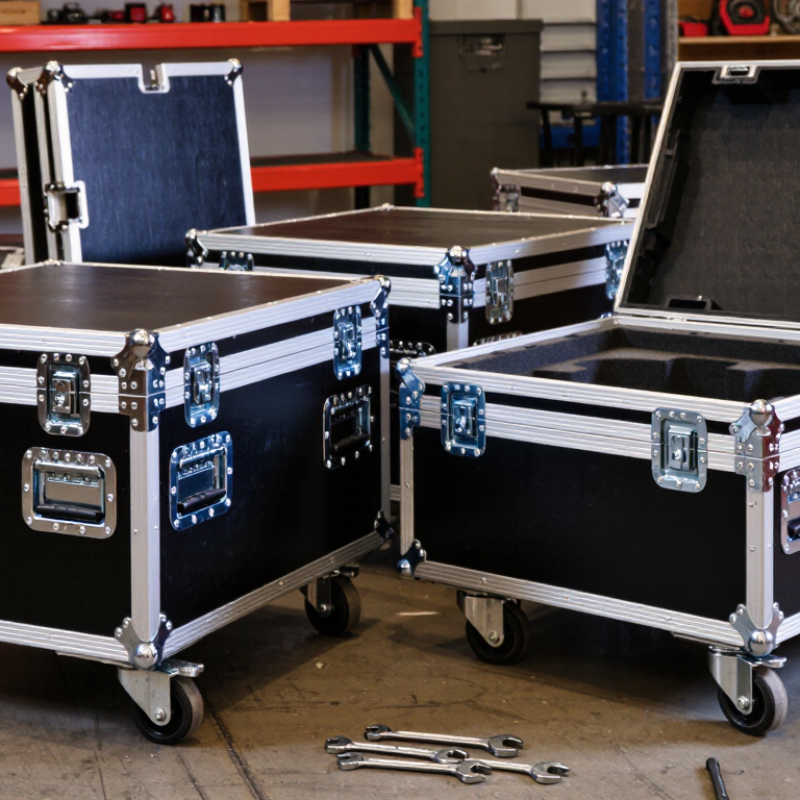
Road case hardware is the collection of fittings that protects a case and keeps it usable during loading, transport, and setup. Aluminum edge extrusions reinforce panel seams, while steel or aluminum corners shield vulnerable edges from knocks. These parts take real wear. Small details matter.
Latches pull the lid firmly against the case body. Recessed versions sit inside shallow cups, reducing the chance of catching on nearby gear. Hinges connect lid and base; continuous hinges spread movement along a longer edge, while smaller hinges suit lighter lids. Handles may be surface-mounted or recessed. A comfortable grip and secure fasteners matter when a case is lifted repeatedly.
The hardware should match the case’s size, weight, and intended use. A large touring case may need stronger latches and handles than a compact equipment box. Check that screws do not protrude into the interior, where they could snag cables or scratch equipment. Fit also matters. Misaligned corners can leave gaps, even when the panels are cut neatly. There is no perfect layout for every case, and choosing hardware by appearance alone can be a mistake. Review how the lid opens and where hands will reach before fixing parts in place.
How Hardware Adds Strength, Security, and Mobility
Road case hardware is the working structure around a case: corners, hinges, latches, handles, and casters. Reinforced corners help spread impact across edges, while sturdy hinges support repeated opening and closing. A recessed latch sits below the case surface, reducing the chance of catching during handling. Small parts matter. A loose screw can weaken an otherwise solid case.
The U.S. Department of Transportation’s Freight Analysis Framework 5.0 projects freight tonnage to grow about 50% from 2020 to 2050. That forecast is not a hardware test, but it highlights the demands placed on equipment in transit. For mobility, correctly rated casters and well-secured wheel plates help a loaded case roll across venue floors and loading ramps. For security, latches should close cleanly and stay aligned after repeated use. Check them under load, not only when the case is empty. Hardware selection still involves trade-offs: larger wheels can roll more easily over uneven surfaces, but add weight and take up space. Even careful choices may need adjustment after real travel.
Common Types of Road Case Hardware
Road case hardware includes the metal parts that protect, close, move, and stack a case. Extruded aluminum edging reinforces plywood panels along exposed seams. Steel ball corners shield vulnerable edges from knocks, while recessed handles sit inside shallow cups to reduce snags during loading. Small details matter.
Butterfly latches pull the lid and base together with firm, adjustable pressure. Hinges keep the lid aligned; some cases also use lid stays to prevent it from falling shut. Casters make heavy cases easier to roll, and larger wheels can handle rough floors better than small ones. Stacking dishes help cases sit securely on top of one another.
There is no universal best set. A road case used in a van may need different hardware from one moved mainly across a smooth stage.
Check that screws are snug, latches close evenly, and wheels turn freely. Even sturdy fittings can loosen over time. That part is easy to miss.
How to Choose Hardware for a Road Case
Choosing hardware begins with the case’s job, not its appearance. A rack case carried up stairs needs different fittings from a trunk rolled between venues. Estimate the loaded weight, then consider who will move it and how often. Handles should sit where hands naturally reach, with clearance for gloves. Measure twice. For rolling cases, choose casters rated above the expected load; thresholds and uneven floors add stress. Two fixed and two swiveling wheels can aid control, but wheel size matters on rough ground. Small wheels may snag.
Match latches, hinges, and corner protectors to repeated impacts and the case’s panel thickness. Recessed hardware helps prevent snags, while draw latches can pull lids firmly shut. Check alignment after assembly; even a small offset can make closure irritating. Use through-bolts or backing plates where handles and wheels take concentrated loads. Thin screws may loosen under vibration. Keep it practical. Before committing, load the case and roll it over a doorway or curb. Listen for rattles and check for flex. I would not overbuild every case: heavier fittings reduce payload and make lifting tiring. That balance is easy to misjudge, so test the actual setup before buying hardware in quantity.
Road Case Hardware: Typical Quantity Ranges
Counts shown are practical examples for a medium-sized road case, not universal specifications. Case size, weight, layout, and transport conditions determine the hardware needed. Choose latches and handles for secure closure and safe lifting; use corner protectors, hinges, and casters suited to the case construction and expected handling.