Choosing the best Case Handle for global buyers is a practical engineering decision, not a cosmetic upgrade. A suitcase may face rain, conveyor belts, crowded cabins, and repeated pulling across uneven pavement. The handle must survive all of them.
Travel volumes make this issue more urgent. The International Air Transport Association reported nearly five billion air travelers worldwide in 2024. SITA’s 2024 Baggage IT Insights report recorded 6.9 mishandled bags per 1,000 passengers in 2023. A weak handle can turn a small baggage problem into a costly replacement, refund, or poor review. It is not only about strength. Grip comfort, extension stability, tube alignment, noise, weight, and repair access also influence the buying decision.
Global buyers should compare material grades, load-test methods, cycle-test results, and supplier quality controls. Aluminum, reinforced polymer, and steel each offer different balances between weight, stiffness, cost, and corrosion resistance. A handle that feels solid in a showroom may loosen after months of use. That happens.
Reports from Grand View Research also show continued growth in the global luggage market, increasing pressure on brands to improve product value. Yet “premium” remains an unclear word. Buyers should request measurable evidence, including pull-force data, salt-spray testing, cycle counts, and sample inspection records. Regional users may also expect different handle lengths and grip shapes. One specification will not fit every traveler. Careful testing, honest limitations, and documented supplier performance create a more reliable Case Handle strategy for 2026.
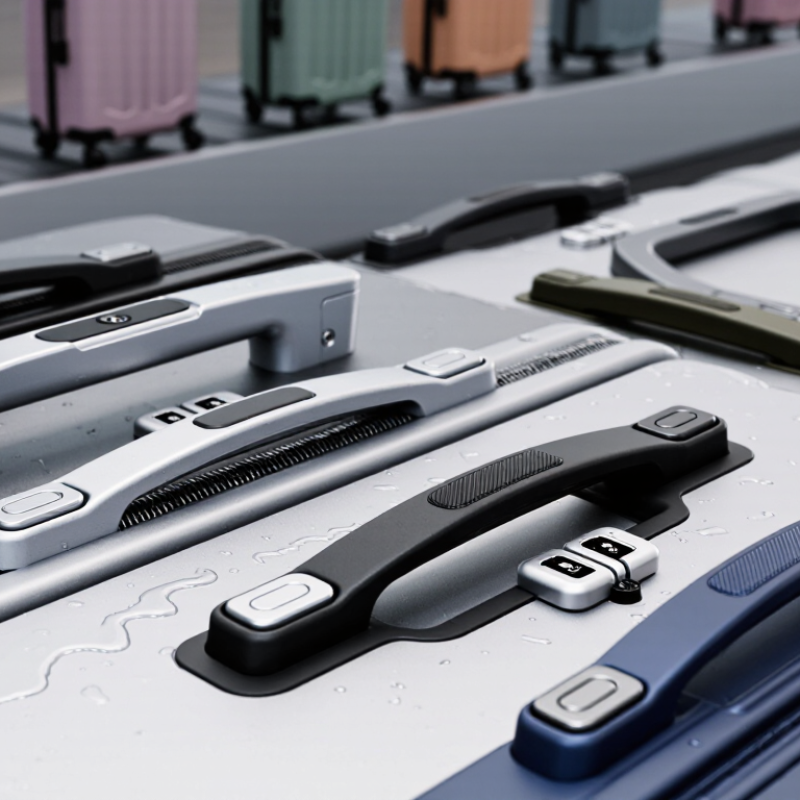
A case handle is the part you grip when lifting, carrying, or moving a case. It connects the case body with your hand. Its design affects comfort, control, and product durability. A handle can use plastic, rubber, metal, or layered materials. Each option feels different under pressure.
A reliable handle should support the case without sharp edges or awkward movement. During practical inspections, I check its grip width, attachment points, and return speed. I also pull it repeatedly with a realistic load. Small details matter. A loose joint may become a serious problem after months of travel. Climate matters too. Heat, cold, moisture, and rough handling can change material performance. A glossy handle may look impressive but still feel uncomfortable. That is a useful warning.
Tips: Ask for load testing and repeated-cycle test records. Request samples before placing a large order. Test the handle with gloves and bare hands. Check whether the grip stays stable when the case is tilted. Measure the distance between the handle and case body. Limited space can pinch fingers. Larger hands may need more clearance. I have found that visual inspection alone is not enough. Supplier claims should be supported by clear test methods, production details, and consistent sample results. Even a well-designed handle may need adjustment after real user feedback.
2026 How to Choose the Best Case Handle for Global Buyers?
How to Match Handle Types with Different Case Applications
Global buyers need more than a comfortable grip. Handle selection should begin with case application, load, and movement.
A compact carry case suits a top-mounted folding handle. It keeps the profile low and remains practical in crowded storage. For heavier equipment cases, use two side handles. Two-person lifting reduces twisting and protects the shell. Measure the real load.
Travel luggage needs a telescopic handle with controlled extension and a soft, non-slip grip. Check tube alignment before approving samples. A recessed spring-loaded handle fits transport cases and flight cases. It reduces snagging during stacking, but its cavity needs drainage and cleaning. Tool cases often benefit from aluminum or reinforced polymer handles. The best choice depends on impact, temperature, humidity, and repeated lifting.
Do not judge strength by appearance. A thick handle may have weak fasteners. During sourcing, compare rated load, mounting points, grip width, corrosion resistance, and replacement access. Ask for cycle testing, not only static load data. Inspect screws, backing plates, and edge clearance on a real case. Small details become expensive failures. A handle can pass a showroom test and loosen after months of vibration. That possibility deserves more attention. No selection is perfect.
How to Match Handle Types with Different Case Applications
The practical fit index uses a 1–5 scale, where 5 indicates the handle type is highly suitable for the application. Telescopic handles are best for wheeled mobility, top handles support frequent lifting, side handles improve two-person or vertical carrying, and recessed handles help protect compact cases during transport. The index is a functional comparison rather than a market-share statistic.
A case handle does more than connect a bag to the hand. It absorbs pulling force, impact, and repeated twisting during transport. For global buyers, material selection should match the case weight and travel conditions. Aluminum alloy offers strong support and a firm feel. Nylon can reduce weight while handling repeated flexing. TPE or rubberized grips improve comfort, especially during long airport walks. However, soft coatings may wear faster in heat, dust, or heavy use. That trade-off matters.
Design affects performance as much as material. A wide, rounded grip spreads pressure across the palm and reduces fatigue. Reinforced attachment points help prevent tearing around screws or rivets. Telescopic handles should move smoothly without excessive side-to-side play. Two-stage tubes often balance compact storage with usable height. Check the locking button with one hand. It should respond clearly, even when the user is wearing gloves.
Practical testing reveals weaknesses that a catalog image cannot show. Test loaded cases across rough flooring, curbs, and uneven pavement. Record the handle after repeated pulling cycles. Inspect loosened fasteners, cracked plastic, and changes in grip texture. Climate also deserves attention. Humidity can affect metal joints, while cold temperatures may make some plastics less flexible. A supplier’s report is useful, but production samples deserve independent checking. No handle performs perfectly in every route. That assumption needs reviewing.
| Material / Handle Component | Typical Density | Typical Tensile Strength | Typical Service Temperature | Main Performance Advantages | Main Limitations | Best-Suited Handle Design | Global Buyer Recommendation |
|---|---|---|---|---|---|---|---|
| Polypropylene (PP) | 0.90–0.91 g/cm³ | 25–35 MPa | Approximately −20°C to 80°C | Very lightweight, good chemical resistance, low moisture absorption, economical for high-volume production. | Lower stiffness than engineering plastics; can become brittle in cold conditions if the formulation is not impact-modified; UV protection may be required. | Molded fixed grips, flexible carry handles, and lightweight recessed handles. | A practical choice for light and medium-duty cases where low weight and cost are priorities. |
| ABS | 1.03–1.07 g/cm³ | 35–50 MPa | Approximately −20°C to 80°C | Good dimensional stability, attractive surface finish, balanced rigidity and impact resistance, easy to mold. | Outdoor UV exposure can cause discoloration and embrittlement unless UV-stabilized; lower chemical resistance than PP. | Ergonomic molded grips, rigid top handles, and shell-integrated carry handles. | Suitable for general-purpose luggage, equipment cases, and consumer products requiring a refined appearance. |
| Nylon / Polyamide (PA6 or PA66) | 1.13–1.15 g/cm³ | 45–80 MPa, depending on grade and moisture content | Approximately −40°C to 100°C | High wear resistance, good fatigue performance, strong mechanical properties, and good performance in moving joints. | Absorbs moisture, which can change dimensions and reduce stiffness; material cost is usually higher than PP or ABS. | Hinges, pivot blocks, sliding parts, spring-loaded mechanisms, and reinforced molded grips. | Recommended for frequently operated handles and demanding applications with repeated movement. |
| Aluminum Alloy, such as 6061-T6 | Approximately 2.70 g/cm³ | Approximately 290–310 MPa | Approximately −40°C to 120°C for typical handle applications | High stiffness-to-weight ratio, good corrosion resistance, strong premium appearance, and stable performance over a wide temperature range. | Higher material and processing cost; can dent or develop sharp edges if poorly protected; metal-to-metal noise may occur. | Telescopic tubes, rigid top handles, lightweight frames, and reinforced mounting brackets. | Best for heavy-duty cases, frequent travel, and buyers prioritizing rigidity and long-term structural performance. |
| Zinc Alloy | Approximately 6.6–6.7 g/cm³ | Approximately 280–330 MPa for common die-cast grades | Approximately −20°C to 80°C | Excellent castability, strong decorative finishes, good dimensional accuracy, and a solid premium feel. | High density increases product weight; surface corrosion can occur if plating or coating is damaged. | Decorative end caps, mounting brackets, latch components, and premium fixed-handle fittings. | Use when appearance, casting detail, and perceived quality are more important than minimum weight. |
| Polyester Webbing | Approximately 1.38 g/cm³ | Typical 25 mm webbing: approximately 1,000–2,500 N breaking strength, depending on construction | Approximately −40°C to 120°C for typical applications | Lightweight, flexible, comfortable, resistant to abrasion and moisture, and suitable for compact storage. | Can stretch or fray if poorly woven; stitching, rivets, and anchor geometry determine the actual assembly strength. | Soft carry handles, shoulder straps, foldable handles, and textile-covered grips. | A strong option for portable cases where comfort, flexibility, and low packed volume are important. |
| Thermoplastic Rubber (TPR or TPE) Grip | Approximately 0.90–1.30 g/cm³ | Typically 5–25 MPa, depending on formulation | Approximately −30°C to 80°C | Soft touch, improved grip, vibration damping, and better comfort during extended carrying. | Not normally suitable as the sole load-bearing structure; some grades are sensitive to oils, heat, or long-term UV exposure. | Overmolded grips on PP, ABS, nylon, or metal cores. | Recommended as a comfort layer combined with a rigid internal core and mechanically secure anchors. |
| Leather or Synthetic Leather Cover | Material-dependent; commonly approximately 0.85–1.20 g/cm³ | Highly variable; the cover should not be treated as the primary load-bearing element | Approximately −20°C to 60°C for typical finished products | Comfortable touch, premium appearance, and effective concealment of a rigid or webbing-based core. | May absorb water, stain, crack, or wear without suitable finishing; performance varies significantly by construction. | Padded top handles with a nylon, polyester, or metal internal core. | Choose for appearance and hand comfort, but specify a separate load-bearing core and durable stitching system. |
| Design Dimension | Recommended Benchmark | Why It Matters |
|---|---|---|
| Grip diameter or equivalent width | Approximately 25–35 mm for a rounded adult hand grip | Helps reduce concentrated palm pressure and improves carrying comfort. |
| Clearance between grip and case | Approximately 30–45 mm for finger clearance, adjusted for gloves and hand size | Prevents fingers from being trapped against the case during lifting. |
| Load path | Use a continuous rigid core or reinforced webbing connected directly to the case structure | The anchor and case wall often fail before the visible grip material. |
| Fastening method | Through-bolts, rivets with backing plates, or molded-in reinforced bosses for high loads | Spreads lifting forces and reduces pull-out or tearing risk. |
| Moving handle mechanism | Use low-friction guides, positive stops, and wear-resistant bushings; verify repeated cycling | Reduces looseness, sticking, noise, and premature wear. |
| Environmental validation | Check cold impact, heat aging, UV exposure, humidity, corrosion, and repeated lifting before approval | Global distribution exposes handles to widely different climates and handling conditions. |
A good case handle should feel stable before it feels stylish. Hold it with bare hands and light gloves. The grip should not cut into your palm or force your wrist sideways. Rounded edges, balanced spacing, and a non-slip surface reduce fatigue during long transport. It should not wobble.
Strength requires more than a high load claim. Check the handle, fasteners, mounting plate, and case wall as one system. Pull the handle repeatedly with a loaded case, not just during a showroom inspection. Watch for cracks, loose screws, bending, or unusual noise. Small details matter. A handle may pass one heavy lift and still fail after hundreds of cycles.
Safety and service life deserve equal attention. Look for covered fasteners, smooth edges, and enough clearance to reduce finger pinch points. Ask suppliers for cycle-test records, material details, inspection procedures, and replacement-part availability. Test samples in heat, cold, moisture, dust, and rough handling when possible. One common mistake is trusting laboratory results without checking real usage. I would also question vague warranty language. A longer service life depends on design, installation, cleaning, and load habits, not the handle alone. Reliable suppliers explain these limits clearly and keep production records for future quality checks.
Before placing an order, global buyers should treat the case handle as a load-bearing component, not a decorative accessory. SITA’s 2024 Baggage IT Insights report recorded 6.9 mishandled bags per 1,000 passengers in 2023. Rough handling remains real.
Ask for a production sample, not only a polished prototype. Check the grip width, edge smoothness, locking action, mounting plate, and screw retention. A handle should open without pinching fingers. It should also remain stable when the case is pulled across uneven pavement. Request cycle-test results, static-load results, salt-spray data, and temperature testing. Test reports should identify methods, sample numbers, and failure limits. Vague certificates are not enough. A basic check is better than a confident guess.
Examine the full supply process. Confirm material grade, surface treatment, replacement parts, packaging protection, inspection stages, and traceability by batch. If the handle uses aluminum, steel, polymer, or mixed materials, ask how galvanic corrosion and cracking are controlled. The 2024 Global Quality Report from a leading inspection industry source emphasizes that defects often arise from process variation, not design alone. A perfect first sample can still fail during mass production. That is easy to forget. Request pre-shipment inspection and retain approved samples for comparison. Also confirm carton dimensions and unit weight, because small changes can affect freight costs and warehouse handling. Cost matters, but an unreliable handle creates returns, delays, and damaged customer trust.