Leave Your Message

7 Best Chest Handles for Global Buyers in 2026

A chest handle looks small on a product drawing. In production, it affects grip, appearance, installation time, and the buyer’s confidence. Global buyers must compare more than price: material grade, finish consistency, mounting-hole spacing, pull clearance, and fastener compatibility all matter. A handle that feels solid in a sample can still disappoint if its coating varies across a shipment. Details show up quickly.

Grand View Research’s global furniture market report estimated the market at USD 541.52 billion in 2023 and projected continued growth through 2030. That broad figure does not measure chest-handle demand directly. It does, however, point to a large, competitive furniture supply chain where small hardware choices influence product quality and sourcing decisions. For buyers, the useful question is not simply which handle looks best, but which one performs reliably across real production runs.

Product-design pioneer Dieter Rams offered a useful principle: “Good design is as little design as possible.” Applied to a Chest Handle, that means a clear grip, clean edges, and a form that suits the furniture without distracting from it. Still, minimal appearance is not proof of durability. Buyers should request material and finish specifications, inspect samples, and confirm dimensions before approving an order. A little skepticism helps. This guide compares seven options for global buyers in 2026, with attention to practical fit, finish, usability, and sourcing—not just showroom appeal.
7 Best Chest Handles for Global Buyers in 2026

Define Chest-Handle Types, Materials, Finishes, and Mounting Styles

Chest handles vary in shape and movement. Bail pulls swing from two fixed brackets, while drop handles fold flat when not in use. Ring pulls offer a simple grip, and recessed handles sit inside a cutout. Each type suits a different chest depth and opening pattern. Small details matter. A projecting handle can catch on nearby fabric, while a recessed one may feel less comfortable with gloved hands.

Material affects both durability and feel. Steel handles suit frequent use, and solid brass develops a warmer tone over time. Zinc alloy can provide detailed shapes, but its strength depends on construction and finish. Common finishes include brushed, polished, antique, and matte coatings. Match the finish to hinges and corner fittings, then check how it looks under the room’s lighting. Color can shift more than expected.

Mounting style matters as much as appearance. Surface-mounted handles attach with screws through the chest wall; backplates can spread pressure across softer wood. Recessed styles need a cutout, so measure carefully before drilling. For a heavy lid, confirm the handle’s stated load capacity and use suitable fasteners. I would not choose by appearance alone. Screw spacing, lid thickness, and hand clearance can rule out an attractive option. A small paper template helps check alignment before installation.

7 Best Chest Handles for Global Buyers in 2026: Types, Materials, Finishes, and Mounting Styles

Comparison of common furniture-handle options for chests, dressers, trunks, and storage furniture
Handle Type Design and Typical Use Common Materials Common Finishes Typical Mounting Style Buying and Installation Checks
Bail Pull A suspended handle that pivots from two fixed posts. A versatile choice for drawers on traditional and transitional chests. Brass, zinc alloy, steel, or iron Polished or satin brass, antique brass, nickel, chrome, matte black Two screw-fixed posts; the bail swings between them. Check the center-to-center spacing before ordering. Allow room for the handle to move freely. Confirm that the supplied screws suit the drawer-front thickness.
Drop Pull A hinged hanging pull, often fitted to trunks, blanket chests, and furniture with a heritage-inspired look. Brass, iron, steel, or zinc alloy Antique brass, aged bronze, black, polished brass Usually attached through a backplate with screws; the pull drops down when not in use. Check the drop length and backplate footprint. A backplate can help cover existing screw holes or surface marks.
Ring Pull A circular or oval ring attached to a plate or small pivot points. Suitable for compact drawers and decorative chests. Brass, iron, zinc alloy, or steel Antique brass, bronze, pewter, polished nickel, black Typically screw-fixed through a backplate; some designs use more than one fixing point. Check the ring’s internal opening for finger clearance and verify the plate dimensions against the drawer front.
Cup Pull A recessed, cup-shaped pull commonly used on drawers. Its curved grip gives fingers a protected place to pull from. Steel, brass, zinc alloy, or aluminum Brushed nickel, brass, bronze, chrome, matte black Usually secured with two screws through the drawer front; some versions require a shallow recess. Check the screw spacing and cup depth. Confirm whether the design sits on the surface or requires routing.
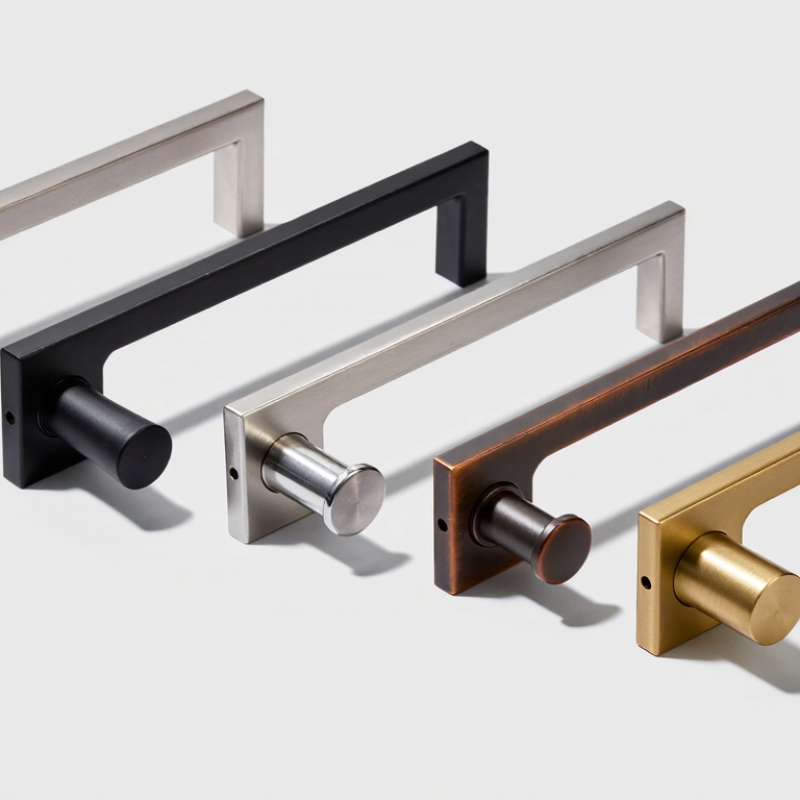
Bar Pull A straight, projecting grip with a simple profile. A practical option for contemporary chests and larger drawers. Stainless steel, aluminum, brass, or zinc alloy Brushed stainless steel, satin nickel, chrome, brass, matte black Two screw fixings through the drawer front, commonly specified by center-to-center distance. Measure the distance between existing holes and check projection so the pull clears the drawer face comfortably.
Recessed Pull A grip set into the drawer or chest surface, creating a low-profile finish with little or no protrusion. Stainless steel, aluminum, brass, or zinc alloy Brushed steel, satin nickel, chrome, brass, black Fitted into a routed or cut opening; some designs are secured with screws or clips from behind. Check the cutout dimensions, installation depth, and required clearance behind the panel before machining.
Furniture Knob A compact, single-point grip suited to small drawers, narrow fronts, or chests where a minimal handle is preferred. Brass, steel, zinc alloy, wood, ceramic, or glass Brass, nickel, bronze, chrome, painted, or natural material finishes Usually attached with one screw through the drawer front; some two-piece designs use a separate fixing. Check the knob’s projection and base diameter. Use a secure fixing and suitable backing for heavier knobs or thin panels.

Specification note: Materials, finishes, dimensions, and fixing methods vary by product and supplier. Confirm the handle’s hole spacing, overall size, projection, screw length, and installation requirements against the chest before purchase.

Measure 96, 128, and 160 mm Hole Spacing Before Comparing Handles

When comparing chest handles, start with hole spacing rather than appearance. The key measurement is the distance from the center of one screw hole to the center of the other. Common options include 96, 128, and 160 mm. These measurements describe spacing, not the handle’s total length. A handle may look close in a product photo and still miss the existing holes.

Use a ruler or caliper, and measure in millimeters for a consistent comparison. If an old handle is installed, remove it when practical and measure between the centers of its mounting holes. Don’t measure from the outer edges of the screws. Write it down. On older furniture, holes can be worn or slightly uneven, so record any uncertainty instead of forcing a precise-looking number.

Once spacing is confirmed, compare the handle’s overall length, projection, grip shape, and finish. Projection matters: a handle that extends too far can catch clothing or feel awkward in a narrow room. Check the supplied screw length against the chest’s drawer front, too. A sample held against the furniture can reveal details photos miss, such as a sharp edge or a finish that looks different in natural light. Matching the measurement is essential, but it does not guarantee a comfortable fit.

Compare 7 Chest Handles by Grip, Durability, Finish, and Installation Fit

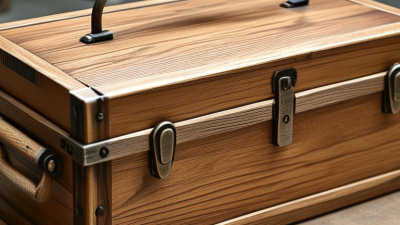
A chest handle should feel secure before it looks stylish. A recessed pull sits nearly flush, reducing snags on crowded shelves, but its shallow grip can challenge larger fingers. Bail and drop pulls offer room for curled fingers and work well on heavy lids. Their moving joints, however, may rattle or wear if the hardware is lightly built. Ring pulls are easy to grasp from different angles, though they can swing against the chest. Small detail. Worth checking.

Cup pulls shield fingers along the edges and suit drawers or low-mounted chest fronts. Bar pulls provide a firm, even grip, but need enough clearance for knuckles. Strap handles can feel comfortable during lifting, yet the material and fasteners must match the expected load. Finish matters, too: brushed or coated surfaces may hide small marks better than polished metal, while damp storage conditions call for suitable corrosion resistance. No finish is maintenance-proof.

Before ordering, measure the existing hole spacing, screw length, and chest-panel thickness. Check whether screws enter solid wood or only thin sheet material; the same handle can feel sturdy on one chest and loose on another. A paper template helps confirm alignment. Installation is rarely difficult, but old holes may not match new hardware. That part is easy to underestimate. Test the grip with the lid open, especially if the handle sits near a hinge or raised trim.

Assess Corrosion-Test Claims Using ISO 9227:2022 Methods

For chest handles, a corrosion-test claim is useful only when its test conditions are clear. ISO 9227:2022 describes salt spray test methods, including neutral salt spray, acetic acid salt spray, and copper-accelerated acetic acid salt spray. These methods expose specimens to controlled corrosive environments. They do not predict exactly how many years a handle will last outdoors.

Ask for the test method and exposure duration, not just a headline number. A report should identify the tested material or finish, specimen preparation, test conditions, and how corrosion was assessed. Check whether the tested sample matches the handle you are buying. A coated flat coupon may behave differently from a finished handle with drilled holes, sharp edges, or joints. Small details matter.

Look closely. A result after 240 hours is not automatically better than one after 120 hours if the methods differ. ISO 9227 sets out procedures; it does not provide one universal pass score for every chest handle. Compare results only when the method and evaluation criteria are comparable. Also consider real use: frequent rain, coastal air, cleaning products, and trapped moisture around mounting points can change performance. Test data helps, but it is not the whole story. I would still want to know how the finish wears where fingers repeatedly touch it.

7 Best Chest Handles for Global Buyers in 2026 — Assess Corrosion-Test Claims Using ISO 9227:2022 Methods

ISO 9227 chamber temperatures (°C)

Use the method that matches the coating and exposure conditions being evaluated: NSS (neutral salt spray), AASS (acetic acid salt spray), or CASS (copper-accelerated acetic acid salt spray). The chart shows nominal temperatures; ISO 9227 specifies tolerances of ±2 °C for each method.

For chest-handle comparisons, request the test method, duration, specimen preparation, and agreed acceptance criteria. ISO 9227 describes test procedures; it does not set a universal test duration or pass/fail threshold, and a salt-spray result alone does not predict service life.

Check REACH Nickel Release: 0.5 μg/cm²/week for Prolonged Skin Contact

In 2026, the best chest handles balance grip, finish, and verified material performance. Buyers may compare stainless-steel pulls, brass handles, zinc-alloy designs, aluminum options, recessed pulls, ring pulls, and wood-and-metal combinations. Yet appearance alone tells little about nickel release. For products within scope, the REACH limit for prolonged direct skin contact is 0.5 μg/cm²/week. This measures nickel released from the surface, not the total nickel in the handle. A bright finish is no guarantee.

Ask suppliers for test reports covering the finished handle, including its coating and any areas likely to wear. Check that the report identifies the tested model, method, and date, and confirm that the test applies to your intended market and use. A worn edge can expose a different surface. So can repeated handling. Paperwork helps, but it is not a substitute for checking samples; I have seen polished hardware look convincing under showroom lights and less convincing after everyday use.

Tips: Request independent laboratory testing using the current applicable method. Inspect seams, edges, and screw heads. Keep records with each shipment, and retest if the material or finish changes. Small details matter.