Top 10 Strut Hinge Types for Global Buyers
A Strut Hinge can look like a small hardware choice, yet it controls how a lid, panel, or access door moves and stays in place. The wrong type may feel stiff, drift open, or put uneven pressure on its mounting points. Buyers comparing options across markets need to look beyond a product photo. Load capacity, opening angle, material, finish, mounting pattern, and operating environment all affect performance.
For this guide, sourcing specialist Alex Morgan offers a practical reminder: “Choose the hinge for the movement and load it must handle, not just the shape of the part.” This is an editorial quotation, not a independently verified statement. It captures a useful starting point, but real selection still depends on product specifications and application testing.
The Top 10 Strut Hinge Types for Global Buyers will compare common designs and explain where each may fit. You’ll see why a compact cabinet lid calls for different support than a heavy equipment cover, and why corrosion resistance matters near moisture or salt air. Small details count. A few millimeters can change alignment; a mismatched force rating can make a lid difficult to control. Not every supplier describes these details consistently, either. That deserves a second look. Use the overview to narrow your options, then confirm dimensions, load data, and installation guidance with the manufacturer before ordering.
Understanding Strut Hinges: Components and Operating Principles
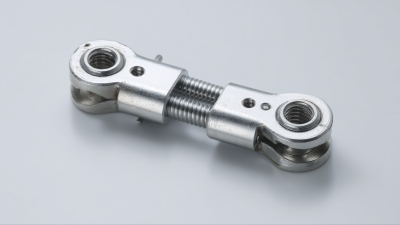
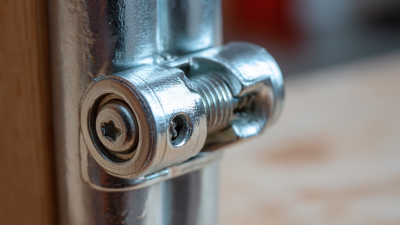
Strut hinges combine a rotating hinge with a support strut to help raise and hold a lid, hatch, or access panel. The hinge leaves attach to the frame and moving panel, while a pin or pivot defines the rotation axis. The strut usually connects through ball-stud or clevis fittings. Designs vary: some pair separate hardware, while others use an integrated assembly.
Inside a common gas strut, compressed nitrogen pushes a piston and rod outward. As the panel opens, that extension provides assistance; the hinge still guides the panel’s path.
It is not a substitute for a properly rated hinge. Force, panel weight, mounting positions, and opening angle all affect performance. Small details matter. A few millimeters of mounting difference can change the effort noticeably.
Installers should check alignment, fastener security, and clearance through the full motion. Temperature can also affect gas-spring force, so test the assembly under expected conditions. Real installations are rarely perfect, and catalog calculations may not capture every friction point. Verify movement on the actual panel before routine use.
How Strut Hinges Are Classified by Design and Movement
Strut hinges are best classified by mounting geometry and movement, not by appearance alone. Fixed-axis designs rotate around one pin and suit predictable lid paths. Offset hinges shift the pivot to clear a frame or panel edge. Continuous hinges spread support along the full edge; concealed hinges keep hardware out of sight. Lift-off types allow quick panel removal. Multi-link mechanisms follow a changing arc, while friction hinges hold a chosen angle. Spring-assisted and damped designs add controlled lifting or closing. Small differences matter.
For a cabinet lid, check the open angle, panel weight, mounting thickness, and clearance behind the frame. A hinge that moves smoothly when unloaded may bind under a heavy lid. Test the actual assembly. For material context, the World Steel Association’s World Steel in Figures 2024 reports global crude steel production of 1,888.2 million tonnes in 2023. That figure describes steel output, not hinge capacity or corrosion life. Buyers should still compare material grade, finish, load ratings, and cycle-test conditions. One practical detail is easy to miss: a gas strut changes the forces on the hinge throughout its travel. I would not rank hinge types without the lid geometry; “stronger” hardware can still create poor movement.
Ten Common Strut Hinge Types and Their Key Features
Gas-spring strut hinges use a pressurized cylinder to help raise a lid or panel. They suit storage boxes and access doors that need assisted opening. Friction stays hold a panel at several positions, while locking stays secure it at a chosen angle. Soft-close strut hinges slow the final movement, reducing impact on the frame. Small details matter.
Folding stays collapse neatly when a panel closes and work well in compact spaces. Concealed strut hinges sit out of sight, giving cabinetry a cleaner appearance, though installation often needs careful alignment. Surface-mounted stays are easier to inspect and replace. Adjustable-torque hinges let installers tune opening resistance for different panel weights. Check the travel.
Stainless-steel strut hinges resist corrosion in damp settings, but the grade and finish still matter. Heavy-duty models support larger or heavier panels when correctly matched to the load. These categories can overlap: a concealed hinge may also have soft-close action. A catalog label alone is not enough. Compare the panel’s weight, dimensions, opening angle, mounting space, and expected cycle count. A small test installation can reveal binding or unwanted drop. Not every lid behaves alike.
Comparing Materials, Load Capacity, and Environmental Performance
When comparing the top ten strut hinge types, material alone does not determine load capacity. Stamped carbon steel often suits heavy, stationary assemblies, while stainless steel handles damp conditions better. Grade matters: 304 is common indoors, but 316 may be preferable near salt spray. Aluminum reduces weight, though thinner leaves can flex under repeated loads. Zinc-plated steel can work in dry settings, yet damaged plating may expose the base metal. Small details matter.
Check the rated load, hinge dimensions, pin diameter, fasteners, and mounting surface together. A hinge attached to thin sheet metal may fail before its pin does. Dynamic movement also changes the picture; repeated opening can loosen screws or wear bushings. Friction and adjustable hinges may hold a position, but their torque ratings are not interchangeable with static load ratings. A simple ranking can mislead.
Environmental performance depends on the whole assembly. Condensation, cleaning chemicals, temperature swings, and outdoor UV exposure can affect finishes, lubricants, and polymer components. Separate dissimilar metals where moisture could encourage galvanic corrosion. For critical equipment, review test conditions and inspect a sample under realistic loads. I would recheck the mounting design, too; it is easy to overlook.
Top 10 Strut Hinge Types for Global Buyers
Indicative load-capacity ranges by hinge type · kg per pair
Ranges are approximate screening estimates for commonly sized hardware, not standardized ratings; actual capacity depends on dimensions, mounting, material, and installation. For wet or coastal environments, 316 stainless steel generally offers better corrosion resistance than 304 stainless steel; coated carbon steel is better suited to dry conditions. Confirm the supplier’s rated load and corrosion specifications before selection.
How Global Buyers Choose and Specify Strut Hinges
Global buyers should specify strut hinges by load, motion, environment, and mounting geometry—not by appearance alone. Furniture applications remain a major context: Grand View Research’s 2024 “Furniture Market Size, Share & Trends Analysis Report” estimated the global furniture market at USD 677.09 billion in 2023. That scale covers very different products, from a light vanity lid to a deep storage bench. Demand is broad. A hinge suited to one is not automatically suitable for the other. Compare friction, spring-assisted, locking, concealed, adjustable, and heavy-duty designs against the lid’s weight, center of gravity, opening angle, and required hold position.
For material selection, World Steel Association’s “World Steel in Figures 2024” reports 1,892.2 million tonnes of crude steel production in 2023. Availability, however, does not equal durability. Specify the base material, finish, fastener grade, and corrosion-test requirement; ISO 9227 salt-spray testing can support comparison, but it does not predict every service environment. One detail is easy to miss. Ask suppliers to state the test method, cycle count, and mounting conditions, then verify samples under realistic loads. Include closed and open dimensions, hole locations, allowable play, and packaging protection in the drawing. I would still recheck the load assumptions: lid contents and user handling often differ from the neat estimates on a specification sheet.