Leave Your Message
Choosing the right Chest Handle is a practical decision, not a purely visual one. Global buyers must match the handle with the chest’s weight, material, opening frequency, and transport environment. A compact wooden storage chest needs different support from a reinforced shipping case. Small details matter.
Consider the grip shape, fixing method, finish, and load performance. A handle that feels comfortable in a showroom may become difficult with wet hands or protective gloves. Stainless steel can suit humid coastal routes, while powder-coated steel may offer a flexible, cost-conscious option. However, material names alone do not prove durability. Ask suppliers for material specifications, load-test records, surface-treatment details, and clear installation instructions. Check screw spacing carefully. A few millimetres can affect the entire fitting process.
Reliable selection also depends on supplier experience and honest evaluation. Review product samples, factory quality controls, packaging methods, and previous export experience. Confirm whether the Chest Handle has been tested under repeated pulling, vibration, and temperature changes. No checklist is perfect. Real use can expose problems that photographs hide. A supplier may provide impressive figures, yet weak mounting hardware can still cause failure. Buyers should compare total performance, not only unit price. This approach supports safer purchasing, consistent quality, and fewer costly replacements across international markets. The best choice is rarely the most decorative one. It is the handle that remains secure, comfortable, and dependable after months of ordinary use.
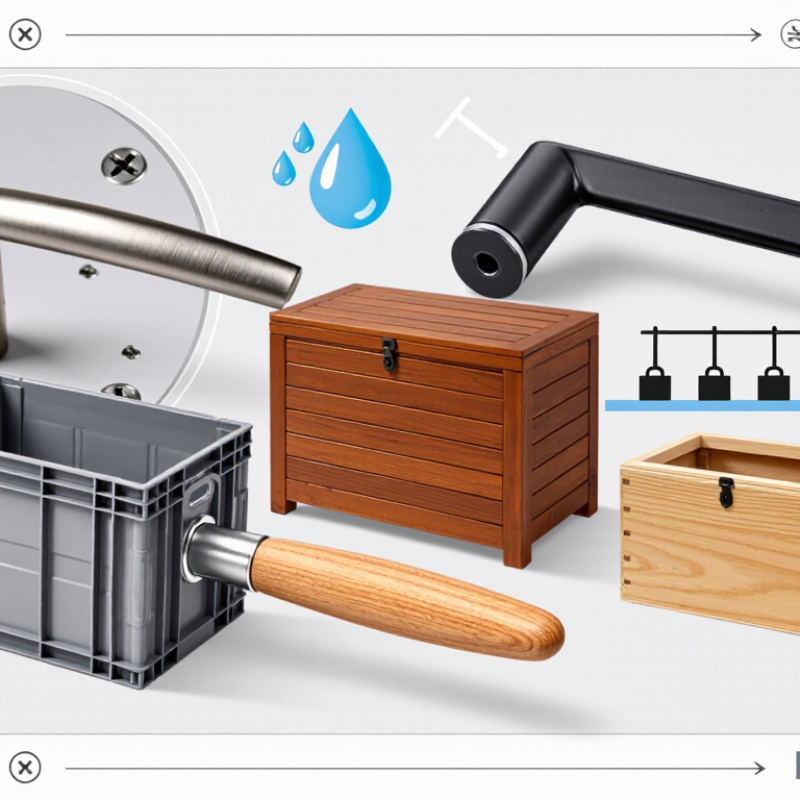
Choosing a chest handle starts with understanding how the chest will be used. Drop handles sit flat when released, making them suitable for storage chests and transport cases. They reduce snagging in narrow spaces. Recessed handles offer similar protection because the grip sits inside a shallow panel. They work well on equipment boxes exposed to frequent movement.
Side handles are practical for lifting larger chests with two people. Spring-loaded handles add flexibility and reduce rattling during transport. Pull handles provide a direct grip, but they need enough clearance around the chest. A decorative handle may look attractive, yet it can be uncomfortable under a heavy load. Appearance should not lead the decision.
Material selection matters across climates. Stainless steel handles resist moisture and suit coastal or humid locations. Zinc-coated steel can support demanding applications when the coating remains intact. Plastic handles are lighter, but their strength depends on temperature and wall thickness. Check the mounting screws, hole spacing, and chest panel strength together. A strong handle cannot compensate for weak fasteners. Load testing should reflect real lifting angles, not only straight pulls. This detail is often missed. Buyers should also confirm dimensions, corrosion expectations, packaging protection, and applicable product standards before ordering. There is no universal best type; an imperfect fit may still become a costly replacement.
| Chest Handle Type | Basic Construction | Typical Mounting Method | Common Center-to-Center Size Range | Typical Chest or Case Applications | Main Advantages | Important Selection Considerations | Suitability for Frequent Carrying |
|---|---|---|---|---|---|---|---|
| Fixed Pull Handle | Rigid grip attached to two mounting points; commonly produced from steel, stainless steel, aluminum, or reinforced plastic. | Through-bolts, machine screws, or wood screws, depending on the chest material and backing structure. | Approximately 64–160 mm, with larger sizes available for heavy-duty cases. | Wooden chests, storage boxes, toolboxes, equipment cases, and small transport containers. | Simple design, easy operation, and good load transfer through two fixed mounting points. | Check the grip clearance, screw length, backing plate strength, and edge distance from the chest wall. | High |
| Folding Drop Handle | A hinged handle that folds flat against the chest when not in use; often made from stamped or forged metal. | Bolted or screwed through a mounting plate, usually with a hinge and stop mechanism. | Approximately 75–170 mm. | Tool chests, instrument cases, shipping cases, portable storage boxes, and road cases. | Reduces projection during storage and transport while providing a comfortable carrying grip. | Inspect hinge quality, stop strength, pinch-point protection, and clearance for folding movement. | High |
| Recessed Handle | The grip sits inside a recessed cup or tray, leaving the outer surface mostly flush. | Flush-mounted with screws, rivets, or bolts; commonly installed in a prepared cutout. | Approximately 75–150 mm. | Flight cases, electronic equipment cases, transport crates, machinery enclosures, and stackable containers. | Protects the handle from impact and minimizes snagging during stacking or movement. | Requires accurate cutout dimensions, sufficient wall thickness, and adequate internal clearance. | High |
| Spring-Loaded Handle | A folding or pivoting handle returned to its resting position by internal or external springs. | Usually fixed with bolts, rivets, or machine screws through a reinforced mounting plate. | Approximately 75–150 mm. | Portable toolboxes, metal chests, electrical enclosures, and equipment transport cases. | Reduces rattling and keeps the grip close to the chest when released. | Evaluate spring fatigue resistance, corrosion protection, operating temperature, and moving-part clearance. | High |
| Bail Handle | A U-shaped or curved movable grip suspended between two side brackets. | Side brackets are secured with bolts, rivets, or screws; the bail pivots from both ends. | Approximately 50–130 mm. | Small storage chests, metal boxes, battery boxes, hardware cases, and compact tool containers. | Allows the grip to move away from the chest and can provide a compact carrying solution. | Confirm bracket strength, pivot wear resistance, grip diameter, and clearance for hand access. | Medium to High |
| Strap or Webbing Handle | Flexible handle made from woven webbing, leather, or coated synthetic material, often combined with metal ends. | Stitched, riveted, or bolted to reinforced areas of the chest. | Commonly 100–250 mm between attachment points, depending on the required grip length. | Wooden boxes, fabric-covered cases, lightweight storage chests, and specialty presentation boxes. | Lightweight, flexible, quiet during handling, and suitable for irregular or curved surfaces. | Check webbing width, stitching or rivet strength, UV resistance, moisture resistance, and edge protection. | Medium |
| Rope Handle | Flexible rope or cord secured through metal eyelets, end caps, or reinforced holes. | Knotted, crimped, stitched, or mechanically clamped through reinforced attachment points. | Typically 100–300 mm between attachment points. | Decorative wooden chests, lightweight storage boxes, gift chests, and outdoor utility containers. | Low weight, flexible movement, and a distinctive traditional or decorative appearance. | Check rope diameter, abrasion resistance, moisture behavior, knot security, and the strength of the attachment points. | Medium |
| Recessed Spring Handle | A spring-loaded folding grip integrated into a recessed metal housing. | Flush-mounted with machine screws, rivets, or bolts through the housing flange. | Approximately 75–150 mm. | Professional road cases, heavy-duty transport cases, audio equipment cases, and industrial containers. | Combines a low-profile design with automatic return and good protection from impact. | Verify housing depth, cutout tolerance, spring performance, fastener access, and compatibility with case panels. | High |
| Plastic Ergonomic Handle | Molded polymer grip, sometimes reinforced with an internal metal core or mounting plate. | Usually fixed with screws or bolts; some designs use integrated clips or snap-fit features. | Approximately 64–128 mm. | Lightweight plastic chests, consumer storage boxes, small tool cases, and indoor equipment enclosures. | Low weight, electrical insulation, comfortable grip contours, and resistance to many household chemicals. | Confirm temperature range, UV stability, impact resistance, polymer compatibility, and maximum intended load. | Medium |
| Heavy-Duty Industrial Handle | Reinforced fixed or folding handle with thick metal sections, robust brackets, and high-strength fasteners. | Through-bolted to a reinforced panel, often using washers, backing plates, or internal support members. | Approximately 100–200 mm. | Industrial tool chests, machinery cases, generator enclosures, large transport containers, and service boxes. | Designed for repeated handling and higher loads when correctly installed on a reinforced structure. | The handle rating depends on the complete assembly, including fasteners, backing structure, panel material, and load direction. | High |
Selection note: The stated size ranges are common reference ranges rather than universal standards. Always verify the manufacturer’s dimensional drawing, material specification, corrosion requirements, mounting hardware, and tested load rating before purchase.